Tel: +86-18065255079 E-mail: wulixia@vameitulvye.com
Whatsapp:+86 15260985928
English
- All
- Product Name
- Product Keyword
- Product Model
- Product Summary
- Product Description
- Multi Field Search

Views: 0 Author: Site Editor Publish Time: 2026-07-15 Origin: Site


White powder on the frame, rust around hinges, a stiff sash, or water collecting at the sill can signal more than a cosmetic problem. In coastal facilities, airborne salt, persistent moisture, damaged finishes, and mixed-metal connections can attack the weakest parts of an aluminum casement window, even when the building is not directly on the shoreline.
Knowing whether the damage calls for cleaning, localized repair, or full replacement prevents wasted maintenance and repeat failures. The following sections help facility teams identify corrosion patterns, trace likely causes, choose an appropriate response, and specify window systems that can better withstand coastal exposure.
Airborne chloride can settle on an aluminum casement window without leaving visible droplets or a clear salt crust. Humidity, condensation, fog, and rain create a conductive moisture film, while repeated wet-dry cycles concentrate salts in joints and sheltered corners. Windward elevations, upper floors, roof corners, harbor-facing façades, and recessed openings may therefore age at different rates within the same facility. Distance from the shoreline is useful context, but it should not replace an exposure review based on orientation, shelter, elevation, and local conditions.
Natural rain does not always provide reliable cleaning. An exposed façade may be rinsed frequently, while a deep overhang stays damp yet receives little direct wash-off. Cooling equipment, industrial emissions, and contaminated runoff can add local pollutants. Exposure should therefore be judged from each elevation’s condition, not from the address alone.
Casement operation concentrates movement and load at hinges, friction stays, handles, locking points, fasteners, sash corners, and gasket terminations. Because the sash opens outward, an aluminum casement window also exposes moving components and concealed joints that fixed glazing does not have. Salt-laden water trapped around a screw or hinge base can remain active after the broad frame has dried, and stiff operation may scratch the finish. Galvanic attack can accelerate where aluminum touches an incompatible metal, while blocked weep holes or poorly sealed corners extend the time that contaminated moisture remains in the assembly.
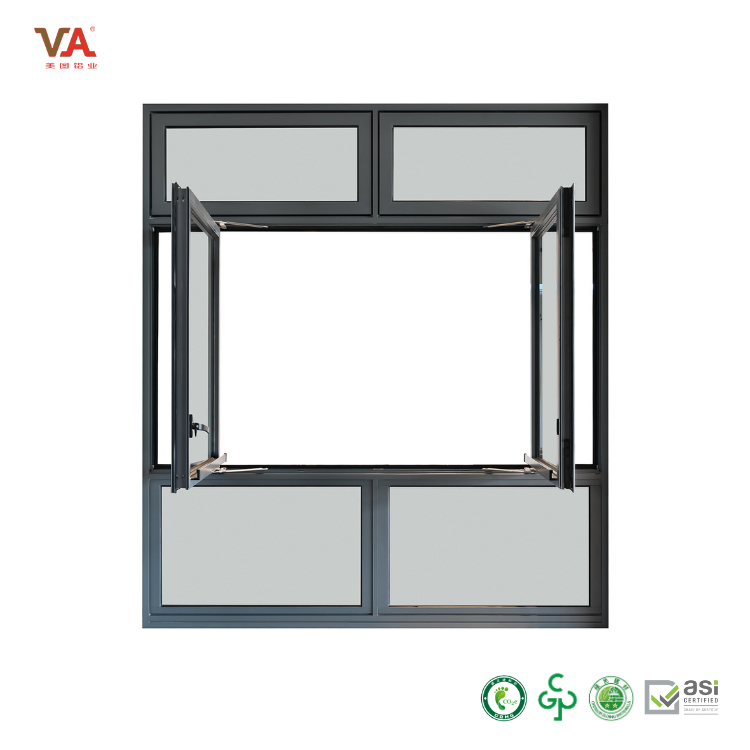
First determine whether the visible material is removable contamination or a change in the aluminum surface. A film that rinses away and leaves a smooth, firmly bonded finish usually indicates recent salt accumulation, while recurring white powder, pin-sized pits, chalking, blistering, or peeling suggests active deterioration. Inspect lower corners, scratches, cut edges, drilled holes, and frame-to-wall interfaces because damage often starts where the protective finish is interrupted. An aluminum casement window may still look acceptable from several feet away even when corrosion is advancing below hardware or sealant. Photograph each area after cleaning so later inspections can show whether damage is spreading.
Rust-colored streaks commonly point to ferrous hardware, contaminated fixings, or mixed-metal contact rather than corrosion products from the aluminum itself. Check screw heads, hinge leaves, friction stays, handle bases, lock keepers, and concealed brackets, then compare operation with nearby windows of the same type. A dragging sash, loose hinge, uneven gap, stiff handle, or misaligned lock is functional evidence that deterioration has moved beyond appearance. Forcing the aluminum casement window can enlarge fastener holes, scrape coated surfaces, and create a falling or trapping hazard. Repeated symptoms across one elevation may indicate a common hardware or installation problem.
Standing water changes the diagnosis because it continually supplies moisture to the corrosion process. Confirm that weep holes and internal drainage channels are open, then inspect perimeter sealant, sill slope, frame corners, gaskets, and adjoining wall materials. Water that returns after cleaning often indicates a drainage or installation defect rather than a simple surface-maintenance problem. Until that source is corrected, treatment of the visible aluminum casement window corrosion is unlikely to last. Moisture marks below the opening may justify checking concealed fasteners for hidden damage.
Observed condition | Likely issue | Appropriate response |
Deposits rinse away cleanly | Recent salt accumulation | Clean and review service frequency |
White residue with shallow marks | Early aluminum corrosion | Document and assess local treatment |
Rust staining around hardware | Hardware or galvanic corrosion | Replace with compatible components |
Bubbling or peeling finish | Under-film corrosion | Arrange substrate and finish assessment |
Deep pitting or sash distortion | Advanced deterioration | Evaluate partial or full replacement |
Cleaning is appropriate when contamination is light, the finish remains bonded, drainage works, and the aluminum casement window opens and locks normally. Use fresh water with a soft cloth, sponge, or nonabrasive brush, adding only a mild cleaner confirmed as compatible with the finish. Wash sash edges, hinges, corners, sill channels, and drainage openings rather than only the broad visible faces. AAMA 609 & 610-25 covers cleaning methods, equipment, and materials for the periodic maintenance of painted and anodized architectural aluminum, including window frames and hardware.
Avoid abrasive pads, metal scrapers, aggressive acidic or alkaline cleaners, and pressure washing directed at joints. These methods can scratch coatings, disturb sealants, or force water into cavities. Rinse away cleaner residue and let the assembly dry before judging the substrate. If deposits return quickly or the finish remains rough, document the area instead of repeating a harsher process.
Localized repair may be reasonable when the surrounding frame is sound and the source can be removed. Work may include replacing corroded hinges, locks, screws, or handles; clearing drainage; correcting incompatible sealant; isolating mixed-metal contact; and treating minor finish damage through an approved process. Every replacement component should meet the corrosion demands of the exposure, not merely fit the opening. Otherwise, the repaired aluminum casement window can restart the same galvanic or moisture problem.
Replacement assessment is warranted when pitting has reduced the metal section, fasteners no longer hold, the sash is distorted, or leakage continues after drainage and sealing corrections. Appearance alone cannot confirm whether a heavily corroded connection remains safe. Cosmetic refinishing may conceal deterioration beneath hardware, sealant, or coating. Where operation or anchorage is uncertain, restrict use until a qualified specialist reviews the unit.
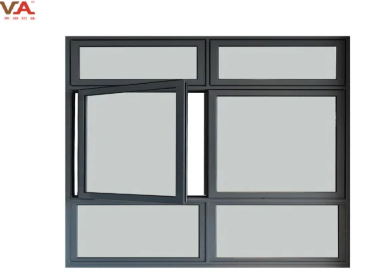
A coastal specification should identify the alloy, profile thickness, pretreatment, finish chemistry, coating thickness, test method, acceptance criteria, and warranty conditions. The phrase “marine grade” does not show how an aluminum casement window was prepared or tested. Request evidence linking the finish to the actual extrusion, color, production line, cut edges, and drilled holes. AAMA 2605-26 covers superior-performing organic coatings on aluminum extrusions and panels, while AAMA 611-26 covers anodized architectural aluminum.
ASTM B117 results support comparison but should not be converted directly into years of service. Stand-alone salt-fog results do not always correlate reliably with natural exposure, and the test does not prescribe one duration or interpretation for every product. Request the full test report, specimen preparation, inspection criteria, replicates, and confirmation that the tested sample matches the proposed aluminum casement window. A headline exposure time is supporting data, not a service-life guarantee.
A strong frame finish cannot compensate for weak hardware or poor installation. Verify the corrosion rating of hinges, locks, fasteners, brackets, and concealed fixings, then require nonabsorbent isolation wherever aluminum meets a dissimilar metal. Review sash corners, screw penetrations, gasket terminations, drainage cavities, sill outlets, perimeter sealants, and wall interfaces. Every drainage route must remain open after fabrication, glazing, sealing, and installation.
Transport, storage, and field drilling should not scratch protected surfaces. Hardware should remain serviceable without grinding through the coating or enlarging holes in the aluminum casement window frame. Sealants must be compatible with the finish and adjacent materials. These details determine whether maintenance stays manageable or becomes recurring repair.
A VA double-glazed aluminum casement window configuration uses 6063 aluminum, powder coating above 60 μm, a frame above 2 mm, customizable color options, hardware strength testing, water testing, and a stated 1,000-hour ASTM B117 salt-fog result for coastal use. VA aluminum window and door systems can also be configured around finish, hardware, glazing, air-tightness, water resistance, and structural-performance requirements. These specifications can support preliminary selection, but the exact configuration still requires project-specific submittals and test documents.
Item to verify | Documentation to request |
Frame | Alloy, temper, and profile thickness |
Finish | Pretreatment, coating type, thickness, and standard |
Testing | Full corrosion report and evaluation criteria |
Hardware | Material grades and component corrosion data |
Metal contacts | Isolation materials and connection drawings |
Drainage | Profile sections and installation instructions |
Warranty | Coastal coverage and maintenance conditions |
Product specifications should become verification questions rather than guarantees. Confirm that the tested specimen matches the supplied pretreatment, finish color, and fabrication process. Identify every fastener and operating component by material, verify mixed-metal isolation, and review the coastal warranty. Double glazing may benefit a facility, but it cannot replace compatible hardware, protected fabrication points, reliable drainage, and controlled installation.
One cleaning interval rarely suits an entire coastal facility. Divide the building into zones reflecting wind direction, height, shelter, storms, nearby water, and contamination sources, then adjust service according to how quickly deposits return. Windward façades, upper corners, recessed openings, and windows near cooling equipment or runoff may need different attention. After severe coastal weather, inspect and rinse the most exposed aluminum casement window groups instead of waiting for the next scheduled visit.
Hinges, locking points, lower corners, and drainage paths deserve closer attention than broad surfaces washed naturally by rain. Each interval should remain consistent with the finish supplier’s care instructions. Aggressive maintenance can damage coatings and seals, while infrequent rinsing leaves chloride deposits active. Early records from each exposure zone provide a practical basis for refining the schedule.
Assign each operable aluminum casement window an identifier tied to its elevation, floor, room, installation phase, and exposure zone. Record photographs, cleaning dates, products used, drainage condition, hardware adjustments, coating defects, and repair history. Consistent documentation distinguishes an isolated unit from a repeating façade-wide pattern. It also gives warranty discussions and replacement planning a factual foundation.
Escalation rules should be simple enough for maintenance staff to apply. Recurring white deposits, new pitting, spreading blisters, stiff operation, rust staining, loose hardware, or repeated water entry should trigger technical review. Comparing failures by orientation and installation batch can expose specification, fabrication, or workmanship problems early. Traceable aluminum casement window maintenance turns reactive housekeeping into planned asset management.
Coastal corrosion is rarely caused by one defect. Salt deposits, trapped moisture, damaged finishes, incompatible fasteners, and blocked drainage often work together, so effective maintenance begins with an accurate diagnosis. Light contamination may need only careful cleaning, while deep pitting, loose hardware, or persistent leakage calls for professional assessment and possible replacement.
For facilities planning an upgrade, V Global Manufacturing limited supplies customizable double-glazed aluminum casement window systems with powder-coated frames and configurable hardware. Matching the finish, drainage, and component materials to the site’s exposure can reduce repeat repairs and support more predictable long-term maintenance.
A: Yes. Aluminum does not rust like steel, but salt deposits, humidity, damaged coatings, and trapped moisture can cause pitting, white corrosion products, and hardware failure.
A: White powder usually indicates aluminum oxidation or corrosion. It often develops where chloride deposits remain on scratched finishes, frame corners, fastener holes, or poorly drained surfaces.
A: Rinse frames and hardware with fresh water, using a soft cloth or mild, finish-compatible cleaner when necessary. Avoid abrasive tools, harsh chemicals, and high-pressure washing.
A: Replacement may be necessary when deep pitting, loose fasteners, distorted sashes, persistent leaks, or unsafe operation remain after drainage, sealing, and hardware problems are corrected.
A: Specify durable finishes, corrosion-resistant hardware, isolated mixed-metal connections, effective drainage, and compatible sealants. Regular inspections and exposure-based cleaning help prevent minor defects from spreading.


