Tel: +86-18065255079 E-mail: wulixia@vameitulvye.com
Whatsapp:+86 15260985928
English
- All
- Product Name
- Product Keyword
- Product Model
- Product Summary
- Product Description
- Multi Field Search

Views: 0 Author: Site Editor Publish Time: 2025-12-09 Origin: Site


Aluminum alloys are commonly used in a variety of industries due to their lightweight, corrosion-resistant, and versatile properties. Two of the most widely used aluminum alloys are 6061 and 6063, both of which are part of the 6000 series. Although they share some similarities, they have distinct characteristics that make them suitable for different applications. In this article, we will explore the differences between 6061 and 6063 aluminum, their respective uses, and how you can choose the right alloy for your specific needs.
The first key difference between 6061 and 6063 aluminum lies in their composition. Both alloys belong to the 6000 series of aluminum alloys, which are primarily alloyed with magnesium and silicon. However, the exact proportions of these elements, as well as the presence of other elements such as copper and chromium, set the two alloys apart. Understanding their composition is essential when choosing the right material for specific applications.
6061 is one of the most versatile and widely used aluminum alloys, offering a balance of strength, workability, and corrosion resistance. The composition of 6061 aluminum is carefully formulated to provide excellent mechanical properties, making it ideal for structural and high-stress applications.
Magnesium (Mg): 0.8-1.2%
Silicon (Si): 0.4-0.8%
Copper (Cu): 0.15-0.40%
Chromium (Cr): 0.04-0.35%
Zinc (Zn): 0.25% max
Manganese (Mn): 0.15% max
The magnesium and silicon content in 6061 provides solid corrosion resistance, while the addition of copper plays a key role in enhancing its strength and hardness. Copper strengthens the alloy, making it suitable for applications that require excellent mechanical properties. Additionally, chromium is added to improve the alloy's resistance to stress corrosion cracking, making it ideal for applications exposed to harsh environments.
6063 aluminum is another widely used alloy in the 6000 series, primarily known for its excellent workability and aesthetic qualities. It is often chosen for applications where complex extrusions and smooth finishes are required, such as in architectural applications, window frames, and decorative elements.
Magnesium (Mg): 0.45-0.9%
Silicon (Si): 0.2-0.6%
Copper (Cu): 0.1% max
Chromium (Cr): 0.05-0.2%
Zinc (Zn): 0.1% max
Manganese (Mn): 0.1% max
Compared to 6061, 6063 contains a lower percentage of copper and a higher percentage of silicon. The higher silicon content enhances the alloy’s ability to be easily extruded into complex shapes and results in a smoother surface finish. This composition provides a unique balance of strength and formability, which is why 6063 is often the go-to alloy for architectural applications.
6063 aluminum’s composition also offers excellent corrosion resistance, especially in outdoor and marine environments. Its lower copper content makes it less susceptible to stress corrosion cracking than 6061, particularly in welded applications. The low copper content also contributes to its superior formability and ease of fabrication.
When choosing between 6061 and 6063 aluminum, it is crucial to understand their mechanical properties, such as tensile strength, yield strength, hardness, and elongation. These properties determine the alloy’s suitability for various applications, ranging from structural components to aesthetic and decorative uses.
6061 aluminum is known for its excellent strength-to-weight ratio, which makes it an ideal material for applications requiring high strength and good mechanical properties. Its mechanical properties make it suitable for structural, aerospace, and automotive applications, where performance is critical.
Tensile Strength: 290 MPa (minimum)
Yield Strength: 240 MPa (minimum)
Hardness: 95 Brinell
Elongation: 12-17%
The tensile strength of 6061 is higher than that of 6063, making it a stronger alloy. Its yield strength is also higher, ensuring that it can withstand greater stresses without deforming. This makes 6061 the preferred choice for structural applications, such as in aircraft components, automotive parts, and marine equipment, where high strength is required.
In contrast, 6063 aluminum is generally softer and more formable, making it easier to work with. While its strength is lower than 6061, its workability and aesthetic qualities make it a popular choice for architectural, decorative, and other low-stress applications.
Tensile Strength: 160 MPa (minimum)
Yield Strength: 110 MPa (minimum)
Hardness: 60-75 Brinell
Elongation: 16-20%
The tensile strength of 6063 is significantly lower than that of 6061, which means it is not as suitable for high-stress applications. Similarly, its yield strength is lower, making it less resistant to permanent deformation under load. However, these properties contribute to its superior workability and ease of extrusion.
6063 aluminum has a lower hardness compared to 6061, making it more prone to surface damage under wear and tear. However, it compensates for this by offering higher elongation, which makes it more flexible and capable of being formed into complex shapes without cracking.
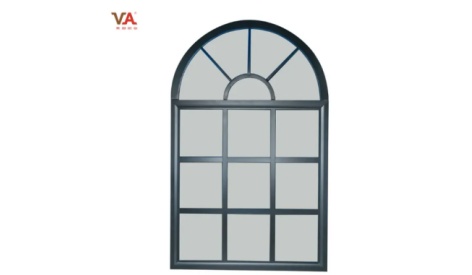
The decision between 6061 and 6063 aluminum ultimately depends on the specific requirements of your application. Here are some key considerations:
Strength: If strength and durability are your primary concerns, 6061 is the better choice. Its higher tensile strength and yield strength make it ideal for structural applications where mechanical properties are critical.
Workability and Extrusion: If your project requires easy formability, complex shapes, and smooth finishes, 6063 is the preferred option. It is particularly well-suited for applications in architecture, such as window and door frames, where aesthetics and ease of fabrication are essential.
Corrosion Resistance: Both alloys offer excellent corrosion resistance, but 6063 has a slight edge in terms of better resistance to corrosion in some environments, especially in architectural applications exposed to the elements.
Welding: If welding is a key part of your project, consider that 6061 may be more challenging to weld due to its higher copper content, which can increase the likelihood of cracking. 6063, with its lower copper content, is generally easier to weld and better suited for welded applications.
Now that we’ve explored the compositions and mechanical properties of 6061 and 6063, let’s dive into the key differences that make them suited to different types of applications.
6061 aluminum is stronger and more durable compared to 6063. This makes it ideal for applications where high strength is necessary. For instance, 6061 is commonly used in aerospace, automotive, and marine industries, where high stress and fatigue resistance are critical.
6063, on the other hand, has lower strength and is best suited for architectural applications or environments where strength is less of a concern but aesthetics, corrosion resistance, and ease of fabrication are more important.
6063 is often preferred for extrusions due to its excellent workability. It can be easily extruded into complex shapes, making it a popular choice for architectural profiles, window frames, and other decorative elements.
6061, while also capable of being extruded, is less suitable for complex shapes and more demanding fabrication processes due to its higher strength and hardness. It is often used in structural components where strength is a priority over intricate designs.
Both 6061 and 6063 exhibit good resistance to corrosion, especially in environments exposed to weather and moisture. However, 6063 is known for slightly better corrosion resistance due to its higher silicon content.
For applications in harsh environments, such as marine environments, 6061 may be a better choice due to its superior strength, but 6063 can still provide excellent resistance in less demanding environments.
6061 aluminum is used in industries that require both strength and durability, including aerospace, automotive, marine, military, and structural components. It is commonly used for parts such as frames, aircraft components, automotive parts, and marine vessels.
6063 aluminum is more commonly used in architectural applications, including window frames, door frames, irrigation tubing, and other applications that require good corrosion resistance and the ability to form intricate shapes. Its ability to achieve a smooth, aesthetically pleasing surface makes it a top choice for decorative uses.
The decision between 6061 and 6063 aluminum depends largely on the specific requirements of your project. If strength and durability are your primary concerns, 6061 is the clear choice. However, if you need an alloy that is easier to extrude and has better workability, 6063 might be more appropriate.
For projects requiring custom extrusions and an aesthetically pleasing finish, 6063 aluminum will provide excellent results. For structural and high-stress applications, 6061 is the preferred option, providing the strength and durability necessary for these environments.
Both 6061 and 6063 aluminum alloys have unique properties that make them suitable for a variety of applications. 6061 is favored for its strength and versatility, especially in structural and high-stress environments, while 6063 excels in applications that prioritize ease of fabrication, corrosion resistance, and aesthetic finishes.
At V Global Manufacturing Limited, we specialize in providing high-quality aluminum products that meet the specific needs of your projects. Whether you need strong, durable aluminum profiles for aerospace and automotive applications or highly customizable extrusions for architectural uses, we have the expertise and products to meet your requirements. If you’re looking for more information about aluminum alloys and how they can benefit your operations, feel free to get in touch with us. We are committed to delivering the best solutions tailored to your needs.


