Tel: +86-18065255079 E-mail: wulixia@vameitulvye.com
Whatsapp:+86 15260985928
English
- All
- Product Name
- Product Keyword
- Product Model
- Product Summary
- Product Description
- Multi Field Search

Views: 0 Author: Site Editor Publish Time: 2026-09-28 Origin: Site


Industrial and commercial standby generators produce noise levels often exceeding 100 dB(A), creating a direct conflict between environmental noise compliance and the massive airflow required for engine cooling and combustion. While solid plant room walls act as highly effective acoustic barriers, ventilation openings become the critical weakest link for sound transmission. Traditional solid soundproofing causes catastrophic equipment overheating, while standard architectural louvers fail to block low-frequency engine drone, leading to OSHA violations, community noise complaints, and failed municipal inspections. To resolve this dual mandate, facility managers and acoustical engineers must evaluate specialized acoustic louvers. This guide breaks down the technical specifications, performance trade-offs, and procurement criteria necessary to specify the correct system for plant and generator rooms.
Airflow vs. Acoustics Trade-off: Specifying a louver for generator room applications requires balancing Sound Transmission Class (STC) ratings with acceptable pressure drop limits to prevent generator derating.
Material Durability Matters: High-velocity airflow combined with outdoor exposure necessitates robust construction; a custom aluminum louver often provides the best strength-to-weight ratio and corrosion resistance.
Comprehensive Passive Control: Acoustic louvers are rarely standalone solutions; they act as critical passive noise control elements that must be engineered to work in tandem with active systems, exhaust silencers, and vibration isolators.
Supplier Verification: Sourcing from a certified aluminum louver supplier with AMCA (Air Movement and Control Association) tested data is critical to ensure real-world performance matches theoretical specifications.
Defining the operational parameters of a successful generator room enclosure establishes the acoustic envelope. You must contain extreme noise without starving the engine of combustion and cooling air. Diesel and natural gas generators require massive volumes of intake air to function correctly. They also need unobstructed exhaust pathways to expel radiator heat. If you choke this airflow, the generator derates. It will eventually shut down on high-temperature faults during power outages.
Differentiating between noise profiles helps dictate the enclosure design. High-frequency mechanical noise comes from cooling fans, alternators, and turbochargers. Low-frequency noise originates from the exhaust and the heavy vibration of the engine block itself. High-frequency sound waves have short wavelengths. They are directional and relatively easy to absorb with thin materials. Low-frequency sound waves have long wavelengths. They are omnidirectional, carry immense energy, and easily penetrate standard building materials.
Noise Source | Frequency Range | Acoustic Characteristic | Mitigation Difficulty |
|---|---|---|---|
Engine Exhaust | Low (63 Hz - 250 Hz) | Omnidirectional, high energy | High (Requires mass and depth) |
Engine Block Vibration | Low to Mid (125 Hz - 500 Hz) | Structure-borne and airborne | High (Requires isolation and mass) |
Radiator Cooling Fans | Mid to High (500 Hz - 2000 Hz) | Directional, broadband air rush | Moderate (Absorbed by porous media) |
Alternator Whine | High (2000 Hz - 8000 Hz) | Highly directional, short wavelength | Low (Easily blocked by line-of-sight barriers) |
Understanding how sound escapes through necessary ventilation gaps reveals the weakest link principle. You can build a plant room with thick, reinforced concrete walls. You can insulate the interior heavily with acoustic panels. However, if you leave an unprotected opening for air, sound pours out like water through a hole in a bucket. The ventilation gap completely negates the acoustic benefits of the heavy walls. You must treat these openings specifically. Specifying a proper louver for generator room applications solves this exact problem by treating the air path.
Makeshift sound barriers and unverified baffles fail commercial compliance standards. Field-fabricated deflection walls often introduce severe fire risks and structural liabilities. Combustible DIY foams degrade rapidly when exposed to diesel fumes and heat. They also restrict airflow unpredictably, creating turbulent air pockets. Engineered solutions undergo rigorous laboratory testing to guarantee performance. They provide predictable static pressure drops and verified acoustic ratings.
Inadequate free area carries a high operational cost. Restricted airflow increases static pressure within the enclosure. When static pressure rises, the radiator fan works harder and may experience cavitation. The engine runs hotter, reducing operational efficiency. This thermal stress can void manufacturer warranties. Chronic overheating degrades engine components prematurely, leading to catastrophic failure when you need standby power the most.
Increased static pressure forces the radiator fan to consume more parasitic engine power.
Coolant temperatures rise beyond safe operating thresholds, triggering automatic shutdowns.
Combustion efficiency drops due to oxygen starvation, leading to unburned fuel and excessive exhaust smoke.
Internal enclosure temperatures bake sensitive electronic control modules and degrade wire insulation.
Local municipal noise ordinances dictate compliance at the property line. Many jurisdictions restrict nighttime noise to 55 dB(A) or lower. Occupational exposure limits protect maintenance personnel inside the facility. OSHA mandates hearing conservation programs if exposures exceed 85 dB(A) over an 8-hour shift. You must meet both standards simultaneously. Fines for non-compliance are steep. Neighbors will file complaints, and municipal inspectors will halt operations if noise exceeds permissible decibel levels.
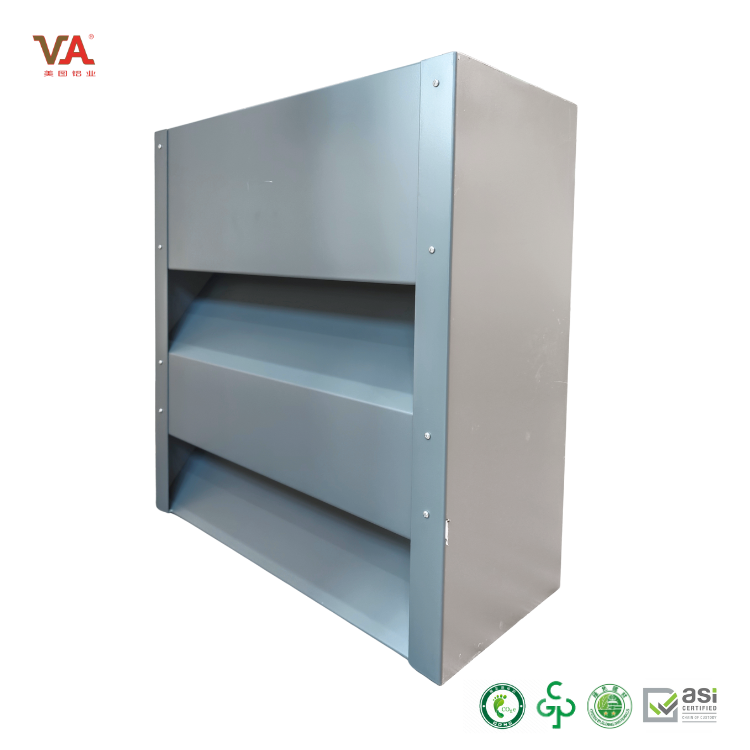
Breaking down the anatomy of a noise reduction louver reveals its role in passive noise control. These units do not cancel sound electronically. They rely on mass, internal geometry, and sound absorption physics. The heavy exterior frame holds multiple horizontal blades. These blades are not solid pieces of metal; they are hollow cavities packed with specific acoustic media.
Airfoil and chevron blade profiles direct airflow while forcing sound waves into absorptive materials. The sound waves cannot travel in a straight line through the louver. They must navigate a tortuous, winding path between the thick blades. Every time a sound wave hits a blade surface, the acoustic media absorbs a portion of its energy. Internal friction within the media converts this acoustic energy into trace amounts of heat, effectively destroying the sound wave.
Blade orientation can be engineered to deflect residual noise. You can angle the blades to push sound downwards. Directing noise toward sound-absorbing ground, like grass or specialized landscaping, reduces property line impact. You can also orient blades away from sensitive adjacent properties or office windows. This directional deflection acts as a secondary, highly effective noise control strategy without adding mechanical complexity.
Inert, non-combustible acoustic media packs inside the louver blades. High-density mineral wool and fiberglass are common choices due to their excellent porosity and flow resistivity. Specialized fire-rated acoustic foam also works well in specific applications. A perforated metal sheet holds this media in place on the underside of the blade. The open area percentage of these perforations allows sound waves to enter the media while protecting it from high-velocity airflow and physical damage. The media must be rot-proof, vermin-proof, and moisture-resistant.
A comparative analysis highlights why standard architectural louvers fail acoustically. A standard aluminum ventilation louver provides basic weather protection and visual screening. It offers high free area percentages, often exceeding 50%. However, its thin, solid blades reflect sound rather than absorb it. Standard louvers provide virtually zero sound transmission loss. Acoustic louvers trade some of that free area for significant, measurable noise reduction capabilities.
Reading and comparing manufacturer specification sheets requires understanding specific evaluation dimensions. You must match the louver's performance directly to your generator's mechanical requirements. Do not rely on generic, single-number decibel reduction claims. Look for tested, verified data across the entire frequency spectrum to ensure compatibility with your specific genset.
Evaluating Transmission Loss (TL) across octave bands is mandatory for accurate specification. Look at the laboratory data from 63 Hz to 8000 Hz. Generator noise dominates the lower frequencies, specifically the 63 Hz to 250 Hz bands. Ensure the acoustic louvers for generator rooms perform exceptionally well in this specific range. High performance at 4000 Hz means little if the low-frequency exhaust drone escapes unchecked through the ventilation system.
Octave Band Center Frequency (Hz) | Typical 8-Inch Depth TL (dB) | Typical 12-Inch Depth TL (dB) |
|---|---|---|
63 | 5 | 8 |
125 | 7 | 12 |
250 | 11 | 18 |
500 | 16 | 24 |
1000 | 22 | 30 |
2000 | 24 | 32 |
4000 | 22 | 30 |
8000 | 20 | 28 |
Understand Sound Transmission Class (STC) and Outside-Inside Transmission Class (OITC) ratings. STC measures interior sound transmission, primarily focusing on speech frequencies. OITC better represents low-frequency exterior noise like transportation, heavy machinery, and diesel engines. OITC provides a much more accurate picture for generator applications. Free Field Noise Reduction capabilities show how the louver performs in an open environment without reflective surfaces bouncing sound back into the source room.
Calculating the maximum allowable pressure drop is a strict mechanical requirement. Every generator model specifies a maximum intake and exhaust restriction limit, usually measured in inches of water gauge (in. w.g.). Sizing the louver correctly keeps the system within those limits. You must calculate the total CFM (Cubic Feet per Minute) required for both combustion and cooling. Then, check the louver's pressure drop curve at that specific free area velocity to ensure compliance.
The thickness of acoustic blades drastically reduces overall free area. Standard louvers often exceed 50% free area. Acoustic louvers typically range from 20% to 30% free area because the thick, insulated blades take up physical space in the airstream. This reduction necessitates much larger wall openings. If you replace a standard louver with an acoustic model of the same physical dimensions, you will choke the engine. You must increase the physical size of the rough opening to maintain the required CFM at a safe velocity.
Balancing upfront costs, structural integrity, and lifecycle maintenance dictates material selection. The louver must withstand constant, heavy vibration from the generator. It faces high-velocity airflow, thermal cycling, and harsh outdoor elements. Cheap materials degrade quickly, requiring costly replacements, causing facility downtime, and compromising the acoustic envelope.
Galvanized steel offers higher mass. In acoustic physics, mass provides slightly better low-frequency attenuation. However, steel is exceptionally heavy. It requires massive structural support and heavy-duty rigging equipment to install. If the galvanized coating scratches during transport or installation, the exposed steel will rust rapidly. Rust compromises the structural integrity, bleeds down the side of the building, and looks highly unprofessional.
A custom aluminum louver provides a superior alternative for the vast majority of commercial installations. Aluminum is significantly lighter than steel. This reduces the dead load on the building structure and simplifies the installation process. Aluminum naturally resists corrosion. It forms a microscopic, protective oxide layer when exposed to oxygen. This makes it ideal for coastal areas, high-humidity environments, and harsh industrial zones where steel would fail.
Material Feature | Galvanized Steel | Extruded Aluminum |
|---|---|---|
Weight per Square Foot | 12 - 18 lbs | 6 - 10 lbs |
Corrosion Resistance | Moderate (Fails if scratched) | Excellent (Naturally oxidizes) |
Structural Load Impact | High (Requires heavy headers) | Low (Easier to frame) |
Installation Labor | High (Requires heavy lifting gear) | Moderate (Manageable by standard crews) |
Evaluating rain defense capabilities prevents catastrophic water ingress. Severe storms drive rain laterally against the building facade. The louver must block this water while maintaining critical airflow. Water entering the generator room causes immediate electrical hazards. Over time, it promotes mold growth and rusts sensitive generator components. Look for louvers specifically tested for wind-driven rain rejection under AMCA standards.
Protective finishes extend the operational lifespan and aesthetic value of the louver. Anodizing alters the surface of the aluminum electrochemically, creating a hard, durable, and weather-resistant finish. PVDF (Kynar) coatings offer exceptional UV resistance, preventing chalking and fading over decades of sun exposure. Powder-coated finishes provide a thick, scratch-resistant barrier available in custom colors. Choose a finish based on your specific environmental exposure, local climate, and architectural requirements.
Practical considerations for contractors and facility engineers prevent job site failures. Installing these heavy, deep units requires careful planning and coordination between trades. You cannot simply screw them into standard drywall framing or lightweight metal studs.
Addressing structural support requirements is the absolute first step. Acoustic louvers weigh significantly more than standard vents due to the dense acoustic infill and heavy-gauge frames. They are also much deeper, often ranging from 6 to 12 inches or more to accommodate the necessary acoustic media. The wall framing must handle this constant dead load. It must also withstand the dynamic wind load transferred from the large surface area during severe weather. You will likely need reinforced steel headers, structural steel framing, and heavy-duty masonry anchors.
Ensuring adequate space for routine generator maintenance is necessary. Mechanics need physical room to access filters, belts, and control panels. Do not install a massive acoustic louver bank that blocks access doors or tightens walkways. Consider designing the louver system with removable sections or hinged acoustic doors. This allows for major equipment replacement, load bank testing, or complete engine overhauls in the future without destroying the wall.
Coordinate louver placement with active noise control systems. Acoustic louvers work best as part of a comprehensive, holistic strategy. Integrate them with exhaust silencers, vibration isolators, and internal acoustic foam wall treatments. Prevent flanking noise transmission at all costs. Sound will exploit any unsealed gap around the louver frame, bypassing the acoustic media entirely. Use high-quality, non-hardening acoustic sealants and dense backer rods to caulk the perimeter thoroughly.
Verify the rough opening dimensions against the approved shop drawings before ordering.
Install heavy-duty structural headers capable of supporting the combined dead load and wind load.
Apply a continuous bead of non-hardening acoustical sealant between the louver frame and the wall structure.
Install backer rods in larger gaps to ensure the sealant maintains a proper depth-to-width ratio.
Attach bird screens or insect mesh using removable frames to allow for future cleaning and maintenance.
Integrate bird screens and insect mesh carefully. Pests will try to nest in the warm, dry generator room, especially during winter months. Mesh keeps them out. However, mesh also restricts airflow. A tight insect screen can add significant static pressure to the system. Factor the screen's pressure drop into your total aerodynamic calculations. Ensure the mesh is installed in a removable frame for easy cleaning, as leaves, dirt, and debris buildup will further choke the airflow over time.
Criteria for shortlisting manufacturers go beyond finding the lowest price. You need a manufacturing partner capable of delivering engineered performance and technical support. A failure in acoustic or aerodynamic performance falls directly on the specifying engineer or facility manager, often resulting in costly retrofits.
Demand independent, third-party laboratory test data. Do not rely on internal marketing claims or theoretical calculations. Look for AMCA (Air Movement and Control Association) certifications for airflow and pressure drop. Check for ASTM E90 and ISO standard compliance for sound transmission loss. Verified data ensures the louver will perform exactly as specified in the field, protecting you from liability.
Assess the supplier's customization capabilities. Generator rooms rarely fit standard, off-the-shelf dimensions. You need a supplier who can engineer a product to exact dimensional requirements down to the fraction of an inch. They must tailor the acoustic performance to your specific noise profile, adjusting blade depth and media density as needed. Aesthetic requirements also matter, especially for highly visible commercial buildings where the louver must match the existing facade.
Evaluate engineering support and lead times. A reliable aluminum louver supplier provides upfront acoustic modeling to predict property line noise levels. They generate detailed, project-specific shop drawings for contractor approval prior to fabrication. They must also offer reliable delivery schedules. Construction projects run on tight, unforgiving timelines. Late louver deliveries delay enclosure sealing, prevent generator commissioning, and hold up the certificate of occupancy.
Calculate your generator's total CFM airflow requirements for both cooling and combustion, noting the maximum allowable static pressure drop.
Measure the baseline ambient noise levels and determine the required decibel reduction at the property line to meet local municipal ordinances.
Consult with an acoustical engineer to map out potential flanking paths in your plant room and verify the structural load capacity of your walls.
Request a project-specific specification, acoustic model, and quote from a certified manufacturer based on your exact rough opening dimensions and environmental conditions.
A: Standard architectural louvers only provide weather protection and airflow. They have thin blades that reflect sound. Acoustic louvers feature deeper, insulated blades designed to absorb sound energy. They force sound waves through a tortuous path, blocking noise transmission while allowing air to pass.
A: Depths typically range from 4 inches to 12 inches or more. The required depth depends on the target low-frequency noise reduction and the necessary airflow volume. Deeper louvers accommodate more acoustic media, providing better attenuation for low-frequency engine drone.
A: Yes. Engineered blade angles provide directional noise control. You can install the louver to deflect residual sound waves downwards toward sound-absorbing ground. You can also orient them to push noise away from adjacent properties, reducing the impact at the property line.
A: Yes, they have a lower free area percentage than standard louvers due to the thick acoustic blades. To prevent restricting airflow and causing engine overheating, you must size the physical wall opening larger. This maintains the required CFM without exceeding pressure drop limits.
A: Absolutely. Aluminum is highly recommended for outdoor enclosures. It provides superior corrosion resistance compared to steel. It will not rust if scratched. Aluminum also offers a high strength-to-weight ratio, reducing the structural load on the enclosure walls.
A: Suppliers need the generator's airflow requirements in CFM and the maximum allowable pressure drop. They also require the target noise reduction in decibels across octave bands, rough opening dimensions, and details about local environmental conditions to specify the correct finish.


