Tel: +86-18065255079 E-mail: wulixia@vameitulvye.com
Whatsapp:+86 15260985928
English
- All
- Product Name
- Product Keyword
- Product Model
- Product Summary
- Product Description
- Multi Field Search

Views: 0 Author: Site Editor Publish Time: 2026-04-22 Origin: Site


Large outdoor projects rarely treat railing as a minor finishing detail because it shapes movement, defines boundaries, and supports long-term safety in busy exterior environments. That is why Aluminum railing is increasingly specified for more than one type of project, especially where designers and planners need a system that works across public circulation zones, commercial exteriors, and exposed outdoor settings. V Global Manufacturing Limited supplies railing solutions for architectural and construction use, and the value of highway railing becomes clearer when it is judged by application rather than by material label alone.
When project teams select railing systems, it is easy to focus on names or familiar categories before asking where the railing will actually be used. That often leads to a mismatch between the system and the site. A railing that works in a light-use private setting may not be the right solution for a public edge, a pedestrian access route, or an exposed circulation zone. The better starting point is always the application.
A private exterior space and a public movement corridor do not place the same demands on a railing. Residential use is usually lighter and more controlled. Public flow brings repeated contact, greater visibility, and often stricter safety expectations. A railing used in these settings needs to be selected with traffic level, exposure, and long-term management in mind.
This matters in outdoor environments where the railing has to guide movement while protecting an edge. Whether the site includes a walkway, stair transition, terrace edge, or public-facing access route, the system should contribute to order and usability rather than acting as a simple barrier. The wrong choice can create maintenance pressure, an awkward appearance, or a weaker user experience.
One of the main advantages of aluminum as a railing category is that it can serve different project environments when specified correctly. A planner may begin with one system family and adapt it through finish, profile, layout, and accessory selection to suit different site conditions.
A walkway edge, a civic ramp, a commercial stair landing, and an industrial access point all require practical thinking, but they do not need exactly the same visual effect or installation arrangement. Application-based planning makes it easier to choose the right direction and helps the railing become a better architectural fit instead of a generic safety add-on.
The usefulness of highway railing becomes easier to understand through real project settings. In larger outdoor environments, the railing often supports safety, movement, visual order, and maintenance planning at the same time.
Public walkways and ramps are among the clearest examples of where highway railing adds value. These areas often involve continuous pedestrian movement, visible edges, and the need for clear direction. The railing does more than prevent falls. It helps define movement and makes the space feel more organized in daily use.
In these settings, visibility matters. The railing should guide movement without making the environment feel heavy. Durability matters as well because public pedestrian areas are exposed to constant use and changing weather. Aluminum railing suits this application because it can provide dependable edge protection with a cleaner look and lower maintenance pressure.
Commercial projects place different expectations on railing systems. Exterior stairs, entrances, access routes, terraces, and upper-level circulation zones all need railings that look professional while standing up to repeated use. In these spaces, appearance and practicality matter equally because the railing is part of the customer-facing environment.
A commercial exterior is judged every day by visitors, tenants, staff, and property managers. If the railing looks too temporary or becomes difficult to maintain, it weakens the quality of the project. Aluminum railing performs well here because it supports a clean exterior image while remaining practical for long-term use.
Bridges, civic edges, and public infrastructure settings are another major application area. These environments often require a balance of structural confidence, public visibility, and lifecycle value. The railing becomes part of how the project is experienced at scale, especially where the public interacts with the edge every day.
In civic spaces, the railing should support the identity of the project while remaining practical to maintain. It may border a bridge walkway, a viewing platform, a raised public route, or a landscaped exterior zone. In each case, the system should contribute to clarity, control, and long-term appearance.
Application Area | Main Requirement | Why Aluminum Railing Works Well |
Pedestrian walkway | Safety and clear boundary | Lightweight, durable, and easier to maintain |
Commercial exterior | Appearance and repeated use | Clean design and long-term finish stability |
Public infrastructure | Durability and lifecycle value | Corrosion resistance and lower maintenance burden |
Industrial access area | Strength and practical installation | Reliable structure with customizable layouts |
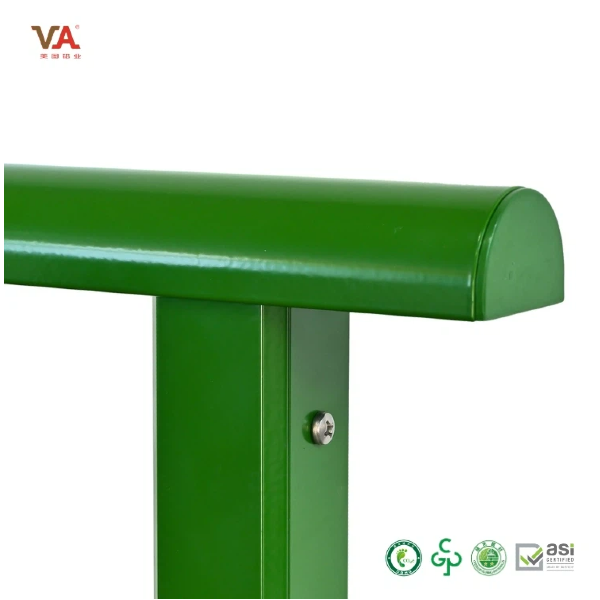
Project planners usually begin with site realities rather than decoration. One of the first concerns is traffic level. A lightly used exterior route does not create the same demand as a high-volume public path or commercial transition area. The more people use the space, the more important railing clarity, stability, and repeatable quality become.
Weather exposure is another early consideration. Outdoor railing systems are always judged by how they respond to rain, sun, humidity, dust, and long-term wear. A specification that looks acceptable in theory may become less attractive if it creates maintenance pressure in exposed conditions.
Ease of installation matters as well, especially on larger or more complex sites. Project schedules, coordination between trades, and repeated installation across multiple areas all influence the value of the selected system. Maintenance over time is equally important because owners and managers want systems that remain orderly and easier to care for throughout the life of the project.
Appearance in public view also matters. In commercial, civic, and infrastructure-facing projects, the railing is highly visible and affects how complete and reliable the finished environment appears.
The more varied the project types become, the more useful it is to choose a railing category that can adapt. Aluminum railing remains attractive across multiple sectors because it offers a strong combination of appearance, durability, and flexibility.
Many public and commercial environments now aim for a cleaner visual language. Project teams want exterior elements that look intentional and current without becoming visually heavy. Aluminum railing works well in this context because it can support controlled profiles and a modern finish direction across different project categories.
Maintenance pressure is one of the biggest long-term concerns in public and commercial projects. When a site contains multiple exterior edges or repeated pathways, even moderate upkeep can become expensive and disruptive. Aluminum railing supports this by offering strong long-term suitability for exterior use and helping reduce the maintenance demands associated with more difficult materials.
Large projects rarely follow one single layout. They may include ramps, stairs, terrace edges, bridge-adjacent walkways, entry zones, and service access points within the same development. A railing system that can adapt to these changes is easier to work with from both a design and planning perspective.
This flexibility also makes highway railing more commercially relevant. Buyers looking for hight way railing or highway railing solutions are often comparing where the system can be used and how well it can support different layouts. Aluminum railing responds well to this need because it can be configured for a broad range of site conditions while still maintaining a consistent design language.
For a project buyer, the main question is not whether a railing can be installed somewhere. The real question is whether it is a smart specification for the type of project being planned. That is where project suitability becomes commercially important. A railing should fit the exposure level, usage pattern, design language, and long-term management expectations of the site.
Customizable finishes, configurations, and accessories strengthen that value. They allow project teams to adapt the system to different spaces without moving away from a consistent railing family. That improves both design coordination and installation practicality across larger developments.
This is why aluminum railing should be positioned as a practical specification for projects that need both function and appearance. It is not only about edge protection. It is about selecting a system that can perform in visible, busy, and weather-exposed spaces while supporting the overall quality of the finished environment.
Highway railing is most useful where projects need safety, visual order, and dependable outdoor performance at the same time. Whether the application involves a public walkway, a commercial access route, a civic edge, or an industrial circulation point, the best result comes from choosing a system that fits the real demands of the site instead of relying on a generic label. V Global Manufacturing Limited provides solutions for practical architectural and exterior use, and the value behind these applications is supported by a well-specified Aluminum Railing system that can serve multiple sectors with confidence. If you are planning a public, commercial, or infrastructure-related project, contact us to discuss the right railing solution for your layout, finish, and performance requirements.
Highway railing is commonly used in public walkways, ramps, pedestrian edges, commercial exterior circulation areas, civic spaces, and other outdoor access zones where safety and visual order are both important.
Because a railing for a light private space may not suit a high-traffic public environment. Traffic level, exposure, and long-term maintenance needs should all influence the choice.
Yes. Aluminum railing is often a practical choice for public infrastructure because it can combine durability, lower maintenance pressure, and a cleaner visual effect in outdoor conditions.
They usually focus on traffic level, weather exposure, installation practicality, maintenance expectations, and how the railing will appear in public view over time.


