Tel: +86-18065255079 E-mail: wulixia@vameitulvye.com
Whatsapp:+86 15260985928
English
- All
- Product Name
- Product Keyword
- Product Model
- Product Summary
- Product Description
- Multi Field Search

Views: 0 Author: Site Editor Publish Time: 2026-09-16 Origin: Site


Property owners and developers face a strict balancing act when specifying fenestration. You must weigh upfront installation requirements against long-term thermal performance, acoustic insulation, and structural longevity. Stricter building energy codes and rising utility costs have transformed window selection into a major infrastructure decision. While the single pane was the architectural standard decades ago, advancements in fenestration technology have made double glazing the baseline for modern comfort and property valuation. Selecting the right glass package directly impacts daily operational efficiency. You must evaluate regional climate extremes, noise pollution levels, and structural requirements. This guide provides a technical evaluation of single vs double glazed UPVC sliding windows. We analyze objective performance metrics, structural realities, and lifecycle returns to facilitate an evidence-based procurement decision.
Thermal Delta: Double glazed units reduce heat transfer (U-value) by up to 50–70% compared to single glazed equivalents, directly impacting HVAC operational costs across all seasons.
Structural Requirements: The increased mass of double glazing necessitates steel-reinforced UPVC profiles and heavy-duty tandem rollers to prevent premature track failure.
Application Suitability: Single glazing remains viable only for non-climate-controlled structures or highly temperate zones, whereas double glazing is the baseline for modern residential and commercial energy compliance.
Lifecycle ROI: Despite a higher initial capital outlay, the energy retention capabilities of double glazing typically yield a positive return on investment within 5 to 8 years, depending on regional climate extremes.
Unplasticized Polyvinyl Chloride represents a massive leap in window frame engineering. Unlike standard PVC used in plumbing, UPVC contains no added plasticizers. This omission makes the material exceptionally rigid, durable, and resistant to ultraviolet degradation. Manufacturers add titanium dioxide to the compound to prevent yellowing and chalking under intense sun exposure. It does not warp, rot, or corrode when exposed to harsh environmental elements. These properties make it highly superior to traditional timber, which requires constant painting, or uninsulated aluminum frames, which conduct heat rapidly.
UPVC serves as the industry-standard framing material for an energy efficient sliding window due to its internal geometry. Manufacturers extrude the material into complex, multi-chambered profiles. These internal hollow chambers trap dead air. Because still air is a poor conductor of heat, these chambers act as a highly effective thermal break. This prevents exterior temperatures from transferring through the frame into the interior space. The result is a highly stable internal climate. The extrusion process also allows for the integration of internal drainage channels, ensuring water never pools within the frame structure.
Sliding windows operate on a simple but physically demanding principle. The sashes slide horizontally along bottom-mounted tracks. This horizontal movement saves space, making them ideal for areas where outward-opening casement windows would obstruct walkways or patios. The weight of the glass and the frame rests entirely on the bottom track and the roller assemblies housed within the sash.
This design introduces specific mechanical vulnerabilities. You must account for several critical failure points over the lifespan of the unit. Friction is the primary enemy of horizontal sliders. If the rollers degrade or the track warps, operation becomes difficult. Common mechanical failures include:
Roller Degradation: Standard nylon rollers wear down under heavy sash weights, causing the window to drag rather than roll.
Weatherstripping Compression: Brush seals and rubber gaskets flatten from constant friction, compromising the airtight seal and allowing drafts.
Track Debris Accumulation: Dirt and grit collect in the bottom track, physically blocking the rollers and potentially derailing the sash.
Frame Deflection: Without proper internal reinforcement, the horizontal spans can bow under the weight of the glass, causing the sashes to bind.
The construction of a single glazed unit is fundamentally basic. It consists of a single pane of glass, typically ranging from 3mm to 6mm in thickness, housed directly within the UPVC sash. There is no secondary pane, no spacer bar, and no insulating gas fill. The glass simply acts as a physical barrier against wind and rain. The glazing bead holds the glass in place, but the overall structural depth of the sash is minimal compared to modern standards.
From a thermal perspective, this configuration is highly inefficient. Glass is a dense material that conducts heat rapidly. A single pane offers virtually zero barrier to conductive heat loss or gain. During winter, the warm interior air hits the cold glass and transfers its heat directly to the outside. During summer, solar radiation heats the glass, turning it into a radiator that warms your interior space. This rapid thermal bridging results in a very high U-value, meaning your HVAC system must work continuously to maintain a comfortable temperature.
Despite their thermal shortcomings, single pane units still serve specific architectural purposes. You should specify a single glazed sliding window primarily for non-habitable or unheated spaces. They perform adequately in detached garages, garden sheds, agricultural outbuildings, or as interior partitions within a larger climate-controlled envelope.
They also remain viable in consistently mild climates where extreme temperature fluctuations are rare. In these scenarios, the primary driver for selection is strict budget constraints. When thermal retention and acoustic dampening are not defined success criteria for a project, single glazing provides a functional, low-cost weather barrier. However, they should never be installed in modern residential living spaces or commercial offices.
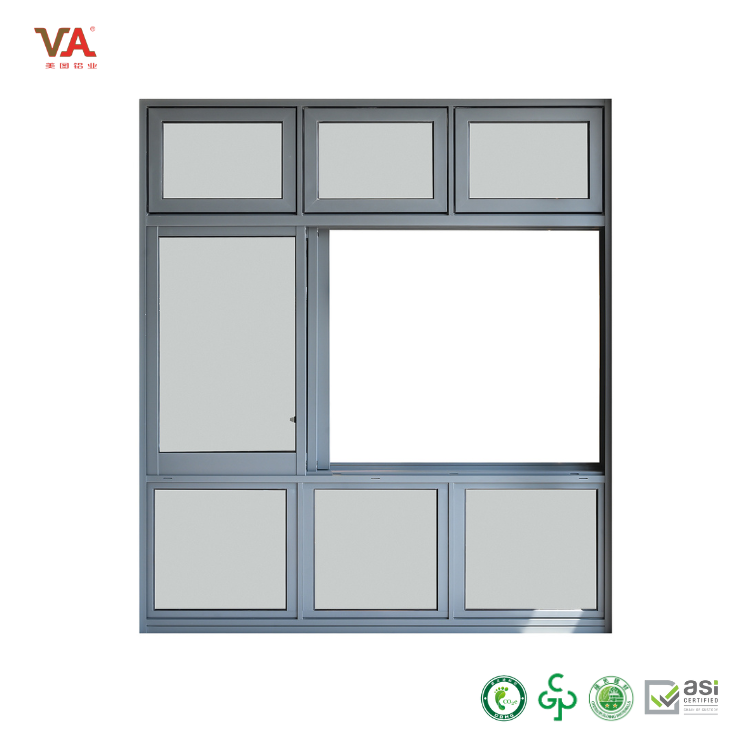
The core of modern fenestration efficiency lies in the Insulated Glass Unit (IGU). A double glazed UPVC window utilizes two separate panes of glass. A spacer bar separates these panes, creating a sealed internal cavity. Historically, these spacer bars were made of aluminum, but modern high-performance units utilize warm-edge spacers made of structural foam or composite plastics to further reduce thermal bridging at the edge of the glass. Manufacturers fill this spacer bar with a desiccant material. The desiccant actively absorbs any residual moisture trapped during manufacturing, preventing internal fogging.
The cavity between the panes is rarely left with standard air. Instead, fabricators inject inert gases, typically Argon or Krypton. These gases are significantly denser than atmospheric air. Their density slows down convective heat currents within the cavity, drastically reducing thermal transfer. Finally, the entire unit receives a dual-layer hermetic seal using polyisobutylene and silicone to lock the gas inside and keep moisture out.
Advanced units also incorporate Low-E (low-emissivity) coatings. Manufacturers apply these microscopic metallic layers to specific glass surfaces within the IGU. Low-E coatings reflect long-wave infrared heat. In winter, they bounce interior heat back into the room. In summer, they reflect exterior solar heat away from the building, while also blocking harmful UV rays that fade furniture.
The engineering of an IGU translates directly into measurable performance outcomes. The primary metric is the U-Value, which measures the rate of heat transfer. Lower numbers indicate better insulation. Double glazing reduces the U-Value dramatically compared to single panes. This reduction maps directly to tangible HVAC energy savings. Your heating system runs less frequently in winter, and your air conditioning cycles less often in summer. The thermal envelope remains stable.
Acoustic performance also sees a massive upgrade. Sound Transmission Class (STC) ratings measure how well a barrier attenuates airborne sound. The dual panes, combined with the dense gas fill and the air gap, disrupt sound waves far more effectively than a single sheet of glass. This provides objective decibel reductions, making double glazing essential for properties located near highways, airports, or busy urban centers.
When you compare the insulation capacity directly, the differences are stark. A single pane window essentially acts as a thermal hole in your wall. A double glazed unit acts as a thermal shield. This difference becomes critically apparent when evaluating condensation resistance. In cold weather, the interior surface of a single pane drops to near-freezing temperatures. Warm, moist interior air hits this cold surface and immediately condenses into water. This moisture pools on the sill, leading to mold growth and poor indoor air quality.
Double glazing maintains a significantly warmer interior glass surface. The thermal break provided by the IGU prevents the inner pane from reaching the dew point. This mitigates moisture buildup and eliminates subsequent mold risks. Furthermore, modern building codes increasingly mandate strict energy performance. Most municipal energy mandates and Energy Star requirements completely disqualify single glazing for new residential construction or major renovations.
Sound travels through materials via vibration. A single pane of glass vibrates easily when struck by sound waves, transferring that acoustic energy directly into the room. Double glazing disrupts this process through decoupling. The outer pane vibrates, but the sound wave must then travel through the dense Argon gas and the air gap before hitting the inner pane. This transition between different mediums dissipates acoustic energy. The wider the air gap between the panes, the better the acoustic dampening.
For enhanced noise reduction, manufacturers often use panes of varying thicknesses in the IGU. For example, pairing a 4mm pane with a 6mm pane blocks different sound frequencies, preventing resonant vibration. You can expect a baseline reduction of roughly 30 to 35 decibels with standard double glazing, compared to just 20 to 25 decibels with a single pane. This difference is highly perceptible to the human ear.
Glass is inherently fragile, but layering it increases structural integrity. A single pane shatters easily upon impact, providing minimal resistance against forced entry or severe weather debris. Double glazing requires an intruder to break through two separate barriers. While standard double glazing is not impenetrable, it significantly increases the time and noise required to breach the envelope.
Carrying this heavier glass requires robust engineering. A custom UPVC window designed for double glazing must feature heavy-duty hardware. The sash frames require thicker UPVC walls and internal steel reinforcement to prevent bowing under the weight. The locking mechanisms must also be upgraded. Multi-point locking systems are standard, securing the sash to the frame at several points to ensure a tight weather seal and superior security.
Performance Metric | Single Glazed UPVC Sliding Window | Double Glazed UPVC Sliding Window |
|---|---|---|
Thermal Insulation (U-Value) | Poor (High heat transfer, U-value ~5.0 - 5.8) | Excellent (Low heat transfer, U-value ~1.2 - 2.8) |
Acoustic Dampening (STC) | Low (STC ~20 - 25) | High (STC ~30 - 35+) |
Condensation Risk | Very High (Cold interior surface) | Low (Warm interior surface) |
Structural Weight | Light (Minimal track strain) | Heavy (Requires reinforced tracks/rollers) |
Security / Impact Resistance | Low (Easily shattered) | Moderate to High (Dual barrier) |
The initial capital outlay for double glazing is undeniably higher. You are paying for twice the glass, specialized IGU manufacturing processes, inert gas fills, and heavier shipping weights. The UPVC frames themselves cost more because they require thicker extrusions and steel reinforcements to carry the load. However, evaluating fenestration purely on initial price is a flawed procurement strategy.
You must calculate the lifecycle return on investment. The thermal efficiency of double glazing drastically reduces year-round HVAC loads. By calculating your localized energy costs and your average heating and cooling degree days, you can project annual utility savings. In most moderate to severe climates, the energy savings offset the initial price premium within 5 to 8 years. After the payback period, the windows generate a net positive financial return through sustained energy conservation. Furthermore, the reduced strain on your HVAC equipment extends the lifespan of your furnace and air conditioning units, preventing premature mechanical failures.
While discussing glazing, the question of triple-pane units often arises. Triple glazing adds a third pane of glass and a second gas-filled cavity. This provides maximum thermal insulation, dropping U-values even further. However, the primary debate remains centered on single vs double glazing for sliding applications due to the law of diminishing returns and mechanical limitations.
Triple-pane glass is exceptionally heavy. In a horizontal sliding window, all this weight bears down on the bottom track and the roller assemblies. This excessive mass often causes severe operational strain. Sashes become difficult to push, rollers wear out prematurely, and tracks can deform over time. For sliding mechanisms, high-quality double glazing offers the optimal balance. It provides excellent energy efficiency and cost-effectiveness without compromising mechanical longevity.
Window specifications heavily influence formal home energy ratings and property appraisals. Energy assessors look closely at fenestration when calculating a building's overall efficiency score. A property fitted with single pane windows will suffer severe penalties in its energy rating, potentially lowering its market value and deterring eco-conscious buyers.
Conversely, modern double glazing enhances buyer perception. Prospective buyers recognize energy-efficient fenestration as a premium upgrade that guarantees lower utility bills and superior comfort. Upgrading from outdated single panes to modern double glazed units consistently yields a high percentage of cost recovery during resale. It transforms a potential structural liability into a strong selling point.
The most significant operational risk with double glazing is the weight. The increased mass can cause the UPVC sash to sag over time. This sagging throws the window out of square, making it difficult to slide and compromising the weather seals. Premature track wear is also a common failure point if the hardware is not rated for the load.
To mitigate this risk, you must specify heavy-duty hardware. Ensure the UPVC sliding window utilizes corrosion-resistant tandem rollers to distribute the weight evenly. Tandem rollers feature two wheels per assembly instead of one. Furthermore, verify that the manufacturer includes internal galvanized steel reinforcement within the UPVC sash and frame profiles to maintain structural rigidity.
The performance of an IGU relies entirely on the integrity of its hermetic seal. Over time, exposure to UV radiation, temperature fluctuations, and standing water can degrade this seal. When the seal fails, the inert gas escapes, and ambient air enters. This leads to internal condensation—often called a blown window—and a complete loss of the engineered thermal efficiency.
Mitigation requires careful vendor selection and proper frame design. Vet manufacturer warranties thoroughly; look for fabricators that offer 10 to 20-year guarantees specifically on the IGU seal. Additionally, inspect the UPVC frame design. The bottom track must feature engineered weep holes. These drainage channels allow rainwater to escape quickly, preventing water from pooling around the bottom edge of the glass and degrading the seal.
Even the highest-rated window will fail if installed incorrectly. Poor installation execution negates all engineered benefits. If the frame is installed out-of-plumb, out-of-level, or out-of-square, the sliding sashes will bind, and the locking mechanisms will not engage properly. Inadequate perimeter sealing allows drafts and water to bypass the frame entirely.
You must mandate installation by certified professionals. The rough opening must be properly prepped and flashed. Installers must use precise shimming techniques to ensure the frame is perfectly square. Finally, they must use low-expansion polyurethane foam insulation to fill the gap between the frame and the rough opening, followed by high-grade exterior silicone sealants to ensure a completely airtight and watertight envelope.
Installation Phase | Critical Checkpoint | Failure Consequence |
|---|---|---|
Rough Opening Prep | Verify opening is plumb, level, and square within 1/4 inch. | Frame distortion, binding sashes, uneven sightlines. |
Flashing Application | Apply sill pan flashing and integrate with weather-resistant barrier. | Water intrusion into wall cavity, structural rot. |
Shimming | Place shims at all anchor points and under the meeting rail. | Track sagging, improper lock alignment. |
Insulation | Use only low-expansion window and door foam. | High-expansion foam will bow the UPVC frame inward. |
Exterior Sealing | Apply continuous bead of high-grade silicone sealant. | Air infiltration, drafty interior, water leaks. |
Conduct a professional energy audit of your property to determine exact heat loss zones and calculate potential HVAC savings.
Measure your existing rough openings accurately and assess the surrounding wall structure to ensure it can support heavier glass loads.
Request detailed technical quotes from certified UPVC fabricators, ensuring they explicitly list the U-value, STC ratings, and hardware specifications.
Verify local municipal building codes and homeowner association guidelines regarding exterior fenestration aesthetics and energy compliance.
Schedule installations during dry, moderate weather windows to allow exterior sealants and expanding foams to cure properly without moisture interference.
A: Generally, no. Single glazed UPVC frames have narrow glazing pockets designed for 3mm to 6mm glass. Double glazed units are typically 24mm to 28mm thick. The existing frame cannot accommodate the depth or the increased weight of the new insulated glass unit. A full frame replacement is required.
A: High-quality double glazed units typically last between 15 and 25 years before seal degradation occurs. Lifespan depends on manufacturing quality, proper installation, and environmental exposure. Frames with excellent drainage prevent water from pooling near the seals, significantly extending the unit's operational life.
A: No window is entirely soundproof. However, double glazing significantly attenuates noise. Standard units reduce sound transmission by 30 to 35 decibels. For extreme noise environments, you can upgrade to acoustic glass, which uses asymmetrical pane thicknesses and laminated interlayers to block a wider range of sound frequencies.
A: For sliding windows, triple glazing is rarely recommended. The addition of a third pane makes the sash exceptionally heavy. This excessive weight puts immense strain on horizontal sliding tracks and roller assemblies, leading to difficult operation and premature hardware failure. Double glazing offers the best balance of efficiency and durability.
A: Yes, track maintenance is critical. You must vacuum the bottom tracks regularly to remove dirt, pet hair, and debris that can jam the rollers. Wipe the tracks with a damp cloth and apply a silicone-based spray lubricant to the rollers annually. Never use oil-based lubricants, as they attract dust.
A: Yes, they drastically reduce interior condensation. The insulated glass unit creates a thermal break, keeping the inner pane of glass much warmer than the outside air. Because the interior glass surface stays above the dew point, warm, moist room air does not condense into water droplets upon contact.


