Tel: +86-18065255079 E-mail: wulixia@vameitulvye.com
Whatsapp:+86 15260985928
English
- All
- Product Name
- Product Keyword
- Product Model
- Product Summary
- Product Description
- Multi Field Search

Views: 0 Author: Site Editor Publish Time: 2026-09-30 Origin: Site


The functional and aesthetic lifespan of an exterior aluminum louver is fundamentally dictated by its surface finish, not just its structural engineering. Specifying the incorrect coating for environmental conditions leads to premature chalking, fading, and atmospheric corrosion. This results in costly remediation, compromised building aesthetics, and potential liability for architects and specifiers. Objectively evaluating powder coating vs PVDF aluminum louvers requires moving beyond marketing claims. It demands analyzing chemical composition, AAMA performance standards, lifecycle value, and specific project exposure levels. You need to align the finish technology directly with the environmental stressors of the installation site. We will break down the exact field performance metrics of both systems. This ensures your next facade specification withstands the physical realities of the job site, from coastal salt spray to urban industrial fallout.
Performance Hierarchy: PVDF finishes offer unmatched UV resistance, chemical resilience, and color retention, making them the default standard for high-rise and high-exposure architectural aluminum louvers.
Durability vs. Flexibility: Powder coating provides a thicker, harder film build with superior scratch resistance and a lower environmental footprint, ideal for high-traffic, ground-level, or moderate-exposure areas.
Standardization is Key: The decision should be driven by AAMA (American Architectural Manufacturers Association) specifications—specifically choosing between AAMA 2604 and AAMA 2605 based on project requirements.
Substrate Preparation: Regardless of the topcoat chosen, partnering with a certified aluminum louver manufacturer is critical, as improper chemical pretreatment will cause either finish to fail prematurely.
A weather resistant aluminum louver must withstand relentless environmental assault over decades of service. We evaluate baseline resistance against continuous salt spray, high humidity, severe thermal cycling, and airborne industrial pollutants. Frosting and condensation cycles also test the adhesion of the coating to the underlying substrate. An exterior architectural component cannot simply look good upon installation. It must maintain its structural and visual integrity while exposed to extreme microclimates. Think of a mechanical penthouse screen in Miami facing hurricane-force salt-laden winds, compared to a ground-level parking garage vent in Phoenix enduring 120-degree ambient heat and intense UV radiation. Each scenario demands specific barrier properties. The finish must prevent oxidation of the raw aluminum beneath. If the barrier fails, the metal pits, the coating blisters, and the system degrades rapidly. Field performance relies entirely on the chemical barrier remaining intact despite daily expansion and contraction of the metal.
The American Architectural Manufacturers Association (AAMA) provides the objective framework for evaluating coating performance. Relying on generic terms like "weatherproof" introduces specification risk. Instead, architects rely on AAMA 2603, AAMA 2604, and AAMA 2605. AAMA 2603 covers basic interior or light commercial use with one year of weathering data. AAMA 2604 demands five years of South Florida weathering, measuring color and gloss retention. AAMA 2605 is the most stringent, requiring ten years of severe exposure with minimal degradation. You specify the standard to guarantee performance. This establishes an objective lens through which to evaluate any coating's claims. When you mandate AAMA 2605, you force the applicator to use top-tier resins and rigorous pretreatment protocols. The testing protocols include cross-hatch adhesion tests, boiling water resistance, and muriatic acid exposure. This eliminates substandard bids and ensures the facade performs exactly as engineered.
Long-term building valuation depends heavily on visual uniformity. Aesthetic permanence is quantified through color retention and gloss retention. Color retention is measured in Delta E units. This calculates the mathematical difference between the original color and the weathered color. Gloss retention indicates how well the resin resists microscopic surface degradation that scatters light and makes the finish look dull. Maintaining these metrics ensures that replacement panels or adjacent building phases match the original installation years down the line. If a university campus builds a new wing five years after the initial structure, the louvers must match visually. A high Delta E shift means the old louvers look chalky and faded compared to the new ones. Controlling this shift requires specifying a finish with exceptional UV stability. You cannot hide a mismatched facade panel on a prominent elevation.
A powder coated aluminum louver relies on a dry finishing process. The chemical composition consists of thermoset polymer resins blended with curing agents, leveling agents, and pigments. Standard PE (Polyester) resins serve economy applications and short-term exterior use. Advanced hyper-durable fluoropolymer resins are engineered to meet rigorous architectural demands. The application process utilizes electrostatic guns to apply dry powder to grounded aluminum profiles. The charged powder particles adhere to the metal surface. The profiles then enter a high-temperature curing oven, typically operating between 375 and 400 degrees Fahrenheit. Heat causes the powder to melt, flow, and chemically cross-link into a continuous, hardened film. It is crucial to clarify categorization. Comparing "PE vs PVDF" is often misleading. PE means standard polyester powder coating, which has vastly different performance metrics than architectural-grade fluoropolymer powders that directly compete with liquid systems.
Polyvinylidene fluoride (PVDF) is a liquid fluoropolymer resin system. Architectural grades mandate a minimum of 70% PVDF resin by weight to ensure performance. The carbon-fluorine bond found in this resin is one of the strongest known in organic chemistry. This specific molecular structure gives a PVDF aluminum finish its extreme environmental resilience. It prevents the binder from breaking down under intense solar radiation. The application process for PVDF is a multi-coat liquid system. It requires a highly controlled factory environment. The process involves applying a chemical conversion coating, followed by a primer, a color coat, and occasionally a clear topcoat for metallic finishes. High-temperature baking fuses these individual layers into a cohesive, impenetrable barrier. The liquid carrier solvents flash off in the oven, leaving behind the solid resin and pigment matrix bonded to the aluminum substrate. This multi-stage baking process ensures maximum adhesion and chemical resistance.
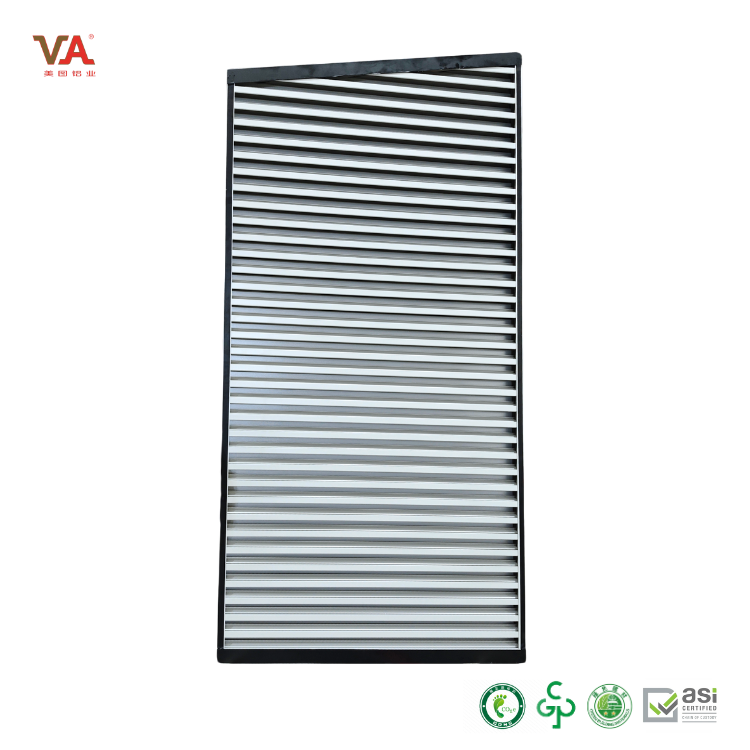
PVDF inherently resists UV degradation better than almost any other architectural coating. The strong carbon-fluorine bonds simply do not break down under continuous solar radiation. This chemical stability prevents pigment fading and resin chalking over decades of direct sunlight. Chalking occurs when the resin binder degrades, leaving loose pigment powder on the surface. PVDF prevents this mechanism entirely. Powder coating has limitations depending on the resin used. Standard PE (polyester) powder coatings break down much faster under intense UV exposure. This leads to noticeable fading and chalking within five to seven years. However, high-end fluoropolymer powder coatings bridge this gap. When formulated correctly, these advanced powders meet AAMA 2605 standards. They offer UV resistance that rivals liquid PVDF, making them viable for sun-drenched southern climates where standard polyester would fail rapidly.
PVDF excels against atmospheric corrosion. It actively resists acid rain, industrial smog, and moisture penetration. Its anti-frosting capabilities handle extreme temperature swings without micro-cracking. This preserves the integrity of the aluminum substrate beneath. This makes it highly suitable for monumental structures in polluted urban centers or coastal zones. Powder coating forms an exceptionally dense moisture barrier. The cross-linked film prevents water ingress effectively. Yet, standard polyester formulations are more susceptible to chemical degradation in heavy industrial zones. While they block moisture, prolonged exposure to acidic or highly alkaline airborne pollutants will degrade a standard powder coat faster than a PVDF finish. You must evaluate the specific airborne contaminants at the job site before selecting the resin type. A manufacturing facility emitting chemical exhaust requires a different finish than a suburban office park.
Powder coating dominates in mechanical durability. The application process yields a thicker film build, typically ranging from 2.0 to 3.0 mils. The thermal cross-linking creates a significantly harder surface. This provides superior resistance to scratching, chipping, and transit damage. It performs exceptionally well in ground-level applications where physical impact is likely. Think of storefront louvers near pedestrian walkways, loading docks, or school courtyards. PVDF is inherently a softer finish. It applies thinner, usually around 1.2 mils total dry film thickness. Because the resin remains flexible, it is more susceptible to surface abrasions during installation, routine maintenance, or in high-traffic areas. Special care must be taken during the handling and assembly of PVDF-coated components to prevent permanent gouging from tools, scaffolding, or adjacent building materials.
PVDF delivers a signature metallic luster and a smooth, uniform appearance that is highly prized in modern architecture. The liquid application allows metallic flakes to align perfectly, creating a brilliant visual effect. Furthermore, liquid PVDF allows for easier custom color matching in small batches. This offers architects immense design freedom for specialized facades. Powder coating offers a different range of aesthetic flexibility. It easily produces textured, matte, and high-gloss variations that liquid systems struggle to match. However, custom color matching for powder coating often requires high minimum volume commitments from powder manufacturers. This makes it less economical for small-scale custom projects. If you need a highly textured finish to hide surface imperfections in the metal, powder coating is the superior choice. If you need a flawless, flat metallic silver, liquid PVDF remains the industry standard.
Powder coating is recognized for its high sustainability profile. It is a dry process that emits virtually zero Volatile Organic Compounds (VOCs) into the atmosphere. Furthermore, modern application booths reclaim and reuse overspray powder, resulting in minimal material waste. This makes powder coating highly eco-friendly and favorable for green building certifications like LEED. Liquid PVDF carries a higher environmental cost during application. The solvent-based nature of the liquid resin means high VOC content. Manufacturing facilities must operate massive thermal oxidizers to capture and destroy these VOC emissions before they reach the atmosphere. While the final cured product is inert and safe, the application process requires strict regulatory compliance and heavy energy consumption at the factory level. Specifiers focused heavily on the embodied carbon of the manufacturing process often lean toward powder coating for this reason.
Evaluation Criteria | PVDF Liquid Finish | Powder Coating (Standard PE) | Powder Coating (Fluoropolymer) |
|---|---|---|---|
AAMA Standard Capability | AAMA 2605 | AAMA 2603 / 2604 | AAMA 2605 |
UV & Fade Resistance | Exceptional | Moderate | Exceptional |
Mechanical Hardness | Low (Prone to scratching) | High (Scratch resistant) | High (Scratch resistant) |
Film Thickness | 1.2 mils (Typical) | 2.0 - 3.0 mils | 2.0 - 3.0 mils |
VOC Emissions (Application) | High (Requires oxidizers) | Zero / Negligible | Zero / Negligible |
Custom Color Matching | Economical for small batches | Requires high volume minimums | Requires high volume minimums |
Evaluating upfront application costs reveals distinct differences. Standard PE powder coating is generally more economical. The single-coat dry application is highly efficient, requires less processing time, and utilizes nearly 100% of the material through overspray reclamation. The labor required to spray and cure a single layer is minimal. Conversely, a 2-coat or 3-coat PVDF system requires more raw material, longer processing times, and higher energy consumption for multiple high-temperature baking cycles. The primer must be applied and flashed off, followed by the color coat, and potentially a clear coat. Each step adds labor and overhead, driving up the initial capital expenditure for the finished product. You are paying for the complexity of the multi-stage liquid application process.
Upfront application cost represents only a fraction of the long-term financial picture. A premium PVDF coating yields significantly better lifecycle value on monumental structures. Recoating or replacing an architectural aluminum louver on a high-rise building is logistically prohibitive and astronomically expensive. You have to factor in scaffolding, swing stages, street closures, and specialized labor. The extended longevity, color retention, and chemical resistance of PVDF offset the initial premium by eliminating the need for premature facade remediation. Investing in a high-performance finish upfront prevents catastrophic maintenance budgets ten years down the line. A cheaper finish that fails at year seven will cost ten times the initial savings to strip and repaint in the field.
Specifiers must match the coating technology to the project tier. Powder coating serves perfectly for interior spaces, ground-level storefronts, moderate climates, and projects with strict initial budget constraints. It provides excellent protection where UV exposure is limited or where mechanical durability is the primary concern. PVDF should be specified for high-rise commercial buildings, coastal exposures subject to salt spray, and areas with heavy industrial pollution. In these environments, long-term aesthetic permanence is non-negotiable. You do not put a standard polyester powder coat on a fifty-story skyscraper, just as you do not need a 3-coat PVDF system for an interior mechanical room vent. Aligning the finish with the building scale ensures optimal performance without over-engineering the specification.
Substrate preparation dictates coating success entirely. Industry data shows that 90% of coating failures stem from poor aluminum substrate preparation, not the topcoat itself. Aluminum requires rigorous multi-stage cleaning to remove extrusion oils, dirt, and natural oxides. The standard process involves an alkaline cleaner, a clean water rinse, the conversion coating application, another water rinse, and a final deionized water rinse. Chrome or advanced non-chrome conversion coatings create the necessary microscopic bonding layer. Without this precise chemical pretreatment, even the highest-grade PVDF or fluoropolymer powder will blister and peel prematurely. The factory must monitor titration levels in the wash tanks constantly. If the chemical baths fall out of specification, the conversion coating fails to form properly, leading to catastrophic delamination in the field.
Because PVDF is a softer finish, transit and assembly require strict handling protocols to mitigate scratch damage. Installers must use protective adhesive films during shipping and maintain padded staging areas on-site. Riggers should use nylon slings rather than steel chains when hoisting louver sections into place. Metal-to-metal contact during staging will gouge the finish down to the bare aluminum. Field touch-ups present a significant risk. Air-dried touch-up paints applied on-site never match the physical properties or exact color weathering of the factory-baked finish. They often lead to unsightly patches years later. You must train the installation crew to treat the finished louvers like finished glass, not raw structural steel. Protective films must also be removed within thirty days of installation to prevent the adhesive from baking into the finish under UV exposure.
Architects must read the fine print from their chosen aluminum louver manufacturer. Warranties are rarely unconditional. Common exclusions include coastal environments, where saltwater proximity voids standard coverage unless a specific marine-grade pretreatment is applied. Furthermore, warranties often exclude damage from chemical exposure or require strict, documented maintenance and cleaning logs. Failing to wash the louvers annually with fresh water and mild soap can legally void a 20-year finish warranty. You must hand over a detailed maintenance manual to the building owner at closeout. If they do not document their annual cleaning, the manufacturer will deny any future claims for chalking or fading. The warranty protects the manufacturer as much as it protects the owner.
Field Phase | Risk Factor | Mitigation Strategy |
|---|---|---|
Transit & Unloading | Abrasion from shifting loads | Mandate foam interleaving and nylon hoisting slings. |
On-Site Staging | Metal-to-metal gouging | Store on wooden dunnage; keep protective films intact until installation. |
Installation | Tool strikes and fastener scratches | Use pre-drilled holes; avoid field cutting coated extrusions. |
Post-Installation | Adhesive bake-on from protective film | Remove all temporary protective films within 30 days of sun exposure. |
Long-Term Maintenance | Warranty voided due to neglect | Implement and document an annual low-pressure wash schedule. |
Neither coating is universally superior; the choice depends entirely on project-specific demands. PVDF dominates in chemical resilience, UV stability, and atmospheric corrosion resistance for monumental architecture. Powder coating leads in mechanical durability, application economy, and eco-friendliness for high-traffic or standard commercial applications. By specifying based on objective AAMA standards rather than generic names, you ensure the finish meets the environmental realities of the site. You must evaluate the microclimate, the building height, and the maintenance capabilities of the owner before making a final decision.
To finalize your specification strategy, follow these next steps:
Request physical finish samples to evaluate gloss, texture, and metallic luster under actual site lighting conditions.
Review Environmental Product Declarations (EPDs) to align the coating choice with project sustainability targets.
Consult with a qualified manufacturer to analyze site-specific environmental stressors before finalizing the specification of any exterior aluminum louver.
Establish a documented maintenance and cleaning schedule to ensure long-term warranty compliance.
A: PVDF generally maintains color and gloss longer under intense UV exposure and atmospheric pollution. However, AAMA 2605-rated fluoropolymer powder coatings offer comparable lifespans and weatherability, bridging the historical performance gap between liquid and dry finishes.
A: Yes, but field touch-ups are inferior to factory finishes. Air-dried touch-up paint lacks the thermal cross-linking of the original baked finish. Over time, the touch-up will fade and chalk at a different rate than the surrounding PVDF, becoming highly visible.
A: Yes. Standard polyester (PE) powder coatings break down faster under UV radiation, leading to earlier fading and chalking. For maximum color retention, you must specify either liquid PVDF or a high-performance fluoropolymer powder coating.
A: The application of liquid PVDF involves high VOC solvents. While the final cured product is completely safe, manufacturing facilities must use thermal oxidizers to manage emissions and comply with strict environmental regulations during the painting process.
A: You should strictly specify AAMA 2605 for coastal environments. This standard requires exceptional resistance to salt spray and humidity. Additionally, you must mandate a marine-grade chemical pretreatment to prevent under-film corrosion.
A: Yes, modern powder coatings can incorporate metallic flakes. However, liquid PVDF typically provides a smoother, more uniform metallic luster because the liquid carrier allows the metal flakes to align more consistently during application.


